Dental abscess — what it looks like, symptoms and what to do
Yesterday evening your gum felt only slightly tender. This morning you saw a whitish bump in the mirror and one cheek is visibly larger than the other. It hurts to bite down. This looks like a dental abscess — and it's the kind of situation you deal with today, not next week.
This guide covers what an abscess looks like, its symptoms, why antibiotics alone are not enough, when to head straight to the ER, and how a about-a-minute AI photo check on preDenti can help you decide who to call first.
⚠️ Important: this article is information, not a diagnosis. A dental abscess always requires treatment by a dentist — it will not heal on its own, even if pain temporarily eases with antibiotics. If you have severe facial swelling, fever above 38°C (100.4°F), or trouble breathing/swallowing — go to the ER immediately.
What a dental abscess actually is
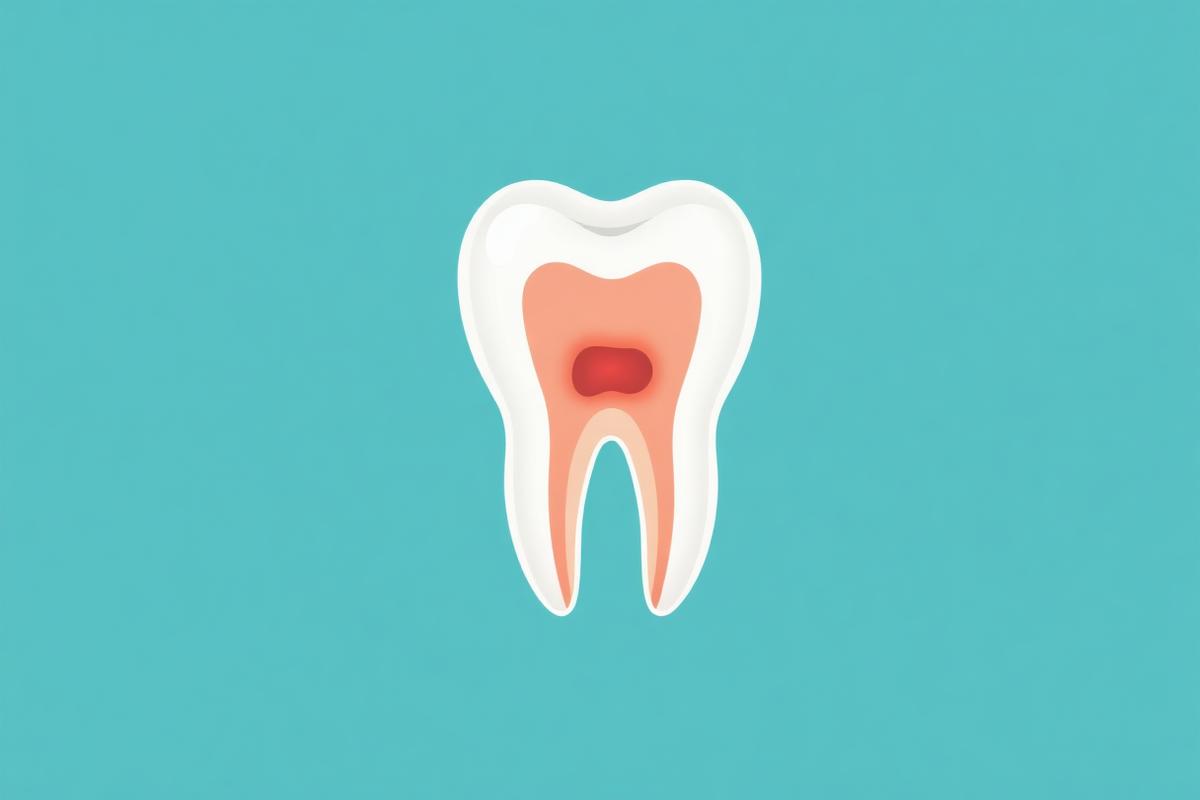
An abscess is a closed pocket of pus — bacteria, dead cells and inflammatory fluid — that forms when infection from a tooth (untreated cavity, cracked tooth, deep gum disease) reaches the root or bone. The body tries to wall off the infection, but the pressure has nowhere to go — hence the throbbing pain and swelling.
There are three main types (periapical, periodontal, gingival), but from a patient's point of view they look and feel similar. The specific diagnosis is a dentist's job, usually with an X-ray. What matters for you: if you see swelling and a bump on the gum, you need a same-day appointment.
What a dental abscess looks like
Most common visible signs:
- a white, yellowish or pearly bump on the gum, right above the sore tooth root,
- red, swollen gum around that tooth, clearly tighter than the other side,
- pus draining — thick, cloudy, with a metallic or salty taste,
- facial asymmetry — one cheek visibly larger, sometimes swelling reaching under the eye or down the neck,
- darker tooth color (gray, brown) — a sign the pulp died and is now the source of infection.
A good phone photo — close up, well lit, gum pulled back with a finger — will show all of this. That is exactly the type of photo you send to the AI scan. See how to take 5 dental photos in 3 minutes →
Symptoms you don't see in the mirror
Not every abscess starts with a visible bump. General symptoms often come first, easily mistaken for the flu:
- throbbing tooth pain, worse on biting and when lying down,
- pain radiating to the ear, temple, jaw or eye,
- bad taste in the mouth (bitter, metallic), bad breath — a classic sign of pus,
- swollen lymph nodes under the jaw or on the neck,
- general malaise, chills, mild fever (37–38°C / 98.6–100.4°F),
- the tooth feels "longer" or slightly loose,
- sensitivity to heat (rather than cold, as with plain decay).
Several of these together, plus a tooth that's been bothering you — take it seriously, even without visible swelling.
Is a dental abscess dangerous? Yes — if you ignore it
Short answer: an abscess does not go away on its own. Pus needs an exit — either through dental treatment or, worst case, it finds its own path and the problem becomes systemic.
Serious complications:
- spread into face and neck tissues (Ludwig's angina) — swelling can close the airway,
- maxillary sinus infection — common with upper teeth abscesses,
- jawbone infection (osteomyelitis),
- sepsis — a medical emergency,
- more rarely: endocarditis, brain abscess, orbital complications.
These are documented, including fatal, cases in adults who kept postponing the dentist. That's why any suspected abscess calls for a decision today: emergency dentist? next-morning appointment? ER?
🔴 When to head straight to the ER — right now
Do not wait for morning if any of these apply:
- facial swelling growing fast (hours, not days),
- swelling reaching under the eye, neck or jaw,
- trouble breathing, swallowing, or opening your mouth,
- fever above 38°C / 100.4°F with chills,
- weakness, confusion, fast heartbeat (sepsis signs),
- swelling appearing 2–3 days after a tooth extraction.
Go to the ER, not a regular dentist — IV antibiotics and surgical drainage may be needed within hours.
Antibiotics for a dental abscess — do they help, which, from where?
Honest answers:
- Antibiotics alone will not cure an abscess. They knock down bacteria, swelling and pain — but the infection source stays in the tooth and returns after the course ends. An abscess always needs dental intervention (root canal, drainage or extraction).
- Antibiotics are prescription-only. "Over-the-counter antibiotic for swelling" is not a legal thing in the EU. Buying online is risky — wrong drug, wrong dose, resistance, serious side effects.
- Which antibiotic — the doctor or dentist decides based on the clinical picture and allergies. Amoxicillin (often with clavulanate) is most common in dentistry; clindamycin or metronidazole if allergic.
- The prescription comes from a dentist, an ER doctor, or a telehealth GP visit — you don't need a night-time ER trip just to get one. You can call in the morning.
Until the visit: NSAIDs (ibuprofen 400 mg every 6–8 h if not contraindicated, can be combined with paracetamol), cold compress on the cheek, warm salt-water rinses. Do not apply heat! Heat dilates vessels and helps the abscess spread.
Home care — what actually helps, what makes it worse
Worth doing:
- Warm salt-water rinse — 1 tsp salt per glass of lukewarm water, 30 seconds, 4–6× per day.
- Cold compress on the cheek — 15 minutes on, 15 off. Reduces swelling and pain.
- Ibuprofen — the best painkiller for inflammatory pain. Follow the leaflet.
- Sleep with your head elevated — an extra pillow reduces throbbing at night.
Strictly avoid:
- hot compresses, hot rinses, sauna, alcohol — they worsen swelling and abscess spread,
- popping the bump with a needle, pin, or toothpick — a fast track to serious infection,
- placing aspirin on the gum — chemical burn,
- waiting for it to "burst on its own" — even if it does, the source stays,
- buying antibiotics without a prescription — see above.
If the abscess bursts spontaneously and pus drains, pain suddenly eases — and that is the biggest trap. People then cancel the appointment. The infection source remains, the abscess reforms in days or weeks, usually worse.
Recovery timeline
After proper treatment (drainage + root canal or extraction + antibiotic):
- pain drops significantly within 24–48 h,
- swelling shrinks over 3–7 days, fully resolves in 1–2 weeks,
- antibiotic course usually 5–7 days — finish it even if you feel better,
- bone around the root heals over months — the dentist may re-X-ray in 3–6 months.
If pain and swelling don't improve within 48 h of starting antibiotics — call the dentist back. That signals more intervention is needed (drainage, different antibiotic).
How preDenti helps before you get to a dentist
An abscess is exactly the kind of situation where a phone photo is genuinely enough for an initial read. Not a replacement for a visit — but about a minute gives you specifics instead of panic.
On preDenti:
- Take 5 photos with your phone (we walk you through it, including a close-up of the affected tooth and gum).
- AI reviews the photos in about a minute and flags what's visible: swelling, tooth discoloration, gum color change, suggestion of a pus bump.
- You get a result with an urgency level — "check within this week" / "visit within 24–48 h" / "urgent — emergency dentist / ER".
- Optional: a licensed dentist reviews the same photos and writes a concrete opinion within 24 h (99 PLN). You can bring it to the clinic, the ER, or attach it to a telehealth appointment for an antibiotic prescription.
This is not "instead of" a visit — it's a way to have, at 10 PM in the bathroom staring at a swollen cheek, a sensible answer in about a minute about who to call in the morning.
🪥 Think it's an abscess? Check in about a minute. Free AI scan on preDenti + optional licensed dentist opinion in 24 h. No card required, no strings attached. Start photo scan →
Check dental photos and see whether you should contact a dentist sooner
5 phone photos. Preliminary AI information in about a minute.
Get a free photo checkWas this article helpful?