Root canal treatment — does it hurt, cost and steps (2026)
Your dentist said "you're going to need a root canal" and your stomach dropped. In your head: it will hurt, take hours and cost a fortune. The reassuring truth is that a root canal under anesthesia usually hurts less than a hygienist visit — and modern endodontics (that's the name of this field) saves the tooth for many years in most cases.
This guide covers when a root canal is necessary, what it looks like step by step, how long it takes, what it costs in Poland in 2026 (NFZ and private), and what you can do today if you're too afraid to even ask at reception.
⚠️ Note: this article is information, not a diagnosis. Whether a tooth qualifies for a root canal, extraction or still just a filling — the dentist decides after an exam and X-ray.
What a root canal is and why it's done
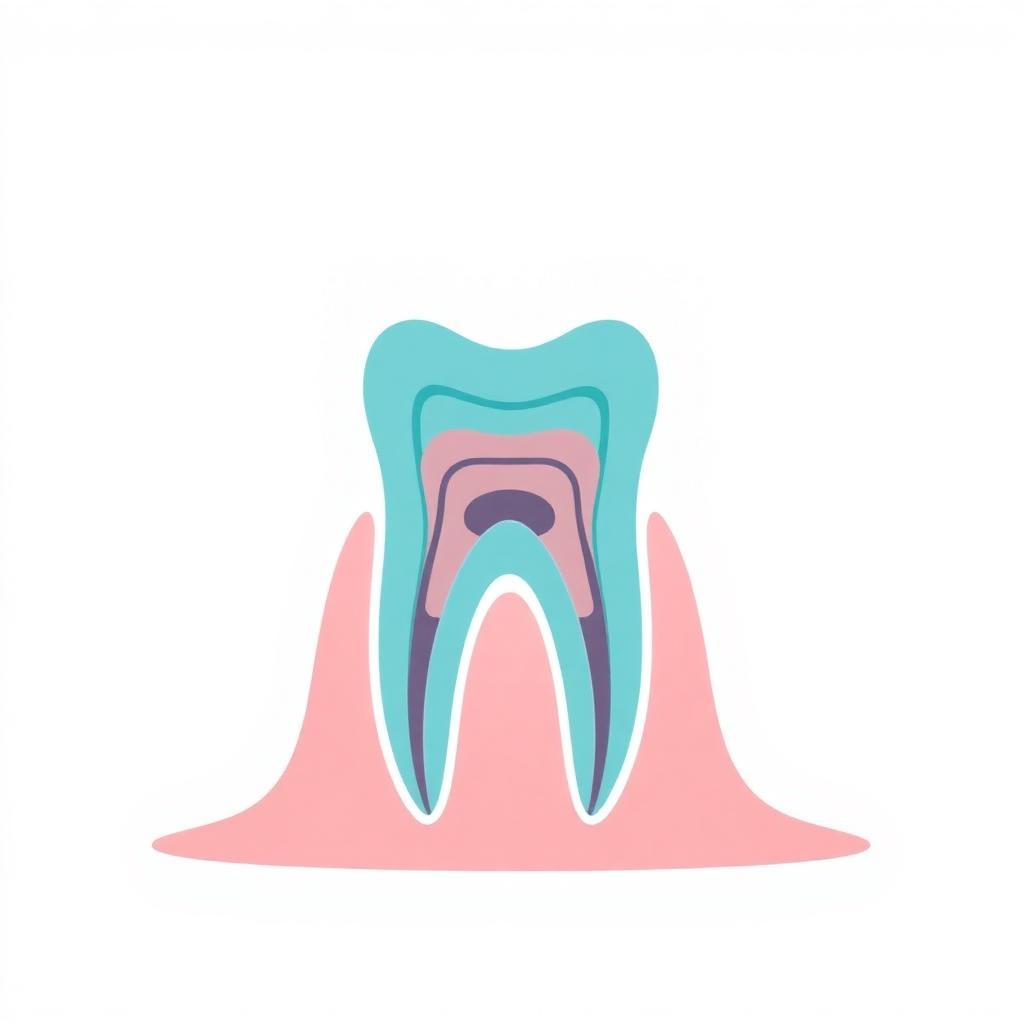
Root canal treatment (endodontic treatment) removes the diseased pulp — the "nerve and blood vessels" inside the tooth — cleans and disinfects the root canals, and seals them. The tooth stays in place, but it is no longer alive.
You need it when the pulp is irreversibly inflamed or dead. Most common causes:
- deep decay that reached the pulp,
- trauma (a fall or hit),
- repeated drilling and deep fillings,
- a cracked tooth,
- a periapical abscess (see our dental abscess guide).
The alternative is usually extraction, followed by an implant or bridge — more expensive and more invasive. So a root canal is usually an attempt to save your own tooth, even if it sounds scary.
Does a root canal hurt? Honest answer
During the procedure — under local anesthesia, practically no pain. You feel touch, vibration and pressure. If anything starts feeling uncomfortable, you tell the dentist — they add anesthetic.
A note on acute inflammation: in severe inflammation (abscess, acute pulpitis) local anesthesia sometimes works less well. A good endodontist adds techniques (intraligamentary, intraosseous anesthesia) and may prescribe antibiotics first to bring inflammation down.
After the procedure — the tooth can be tender when biting for 2–5 days, sometimes mildly achy. That's a normal reaction. Standard ibuprofen 400 mg every 6–8 h handles it.
Pain that increases after 3–5 days, doesn't go away or comes with swelling — call the dentist back. Something needs follow-up.
💡 Worth knowing: the worst pain in the whole "root canal" story is usually before the visit — the pulpitis that drove the patient to the dentist. The procedure itself typically brings relief.
Root canal steps — one by one
Classic sequence:
- History + X-ray — the dentist evaluates the tooth, takes a targeted X-ray or CBCT (3D), plans the number of canals.
- Local anesthesia — 2–5 minutes to take effect.
- Rubber dam isolation — standard in proper endodontics; blocks saliva and bacteria.
- Access opening — the dentist drills into the pulp chamber.
- Pulp removal + canal shaping — with fine files (hand or motorized), cleaning and widening the canals.
- Disinfection and irrigation — sodium hypochlorite and other agents to kill bacteria.
- Canal filling — usually gutta-percha (a plastic material) plus sealer.
- Control X-ray — checks that the filling reaches the root tip.
- Tooth restoration — filling, post and core, and often a crown (root-canal-treated teeth are more brittle).
Increasingly the whole thing is done in a single visit (60–120 min), especially simple front teeth. Multi-rooted molars, active infection or complex anatomy — more often 2–3 visits, 1–2 weeks apart.
How long a root canal takes
- Single-rooted tooth (incisor, canine): usually 60–90 min, often one visit.
- Two-rooted tooth (premolar): 90–120 min, 1–2 visits.
- Molar (3–4 canals, sometimes more): 2–3 hours total, often split into 2 visits.
- Retreatment: longer, because old filling must be removed first.
- Restoration and crown: separate visits, another 1–2 weeks later.
Real timeline "from first visit to finished tooth with crown" is usually 2–6 weeks.
Cost of a root canal in Poland (2026)
Private practice (rough ranges, city-dependent):
| Scope | Approximate price (2026) |
|---|---|
| Consultation + targeted X-ray | PLN 100–250 |
| CBCT (cone-beam CT) | PLN 250–500 |
| Root canal — incisor/canine (1 canal) | PLN 700–1,200 |
| Root canal — premolar (2 canals) | PLN 900–1,500 |
| Root canal — molar (3–4 canals) | PLN 1,200–2,500 |
| Retreatment | PLN 1,500–3,000 |
| Restoration (filling / post and core) | PLN 200–800 |
| Crown (zirconia/porcelain) | PLN 1,500–3,500 |
All-in: saving a molar with a root canal + crown typically costs PLN 3,000–5,500 across several visits. The alternative (extraction + implant) is usually PLN 4,500–8,000 plus a longer treatment window.
Root canals under Polish NFZ
Yes, reimbursed, but with limits:
- Front teeth and premolars (3 to 3, 5 to 5) — covered by NFZ.
- Molars in adults — usually not treated on NFZ, only extracted. Exceptions: pregnant women, under 18.
- NFZ standard differs from private (often no rubber dam, no microscope, no CBCT), which affects success in complex anatomy.
NFZ waiting times are typically weeks to months. For acute pain — call the nearest NFZ dental emergency shift.
Success — will the tooth "hold" after a root canal?
Modern endodontics (rubber dam, microscope, rotary files) has a success rate of 85–95% for primary treatment and 70–85% for retreatment. A properly treated and crowned tooth can last 10, 20, 30+ years — sometimes for life.
What lowers the odds:
- root fracture (often means extraction),
- no proper restoration (a tooth with just a filling after RCT cracks easily),
- infection that couldn't be controlled,
- complex canal anatomy without CBCT / microscope.
That's why the crown after root canal matters — it looks expensive up front, but often decides whether the tooth lasts 3 years or 30.
Root canal vs extraction + implant — quick comparison
| Criterion | Root canal + crown | Extraction + implant |
|---|---|---|
| Keep your own tooth | ✅ Yes | ❌ No |
| Treatment time | 2–6 weeks | 3–9 months (implant integration) |
| Cost (2026) | PLN 2,500–5,500 | PLN 4,500–8,000 |
| Long-term success | 85–95% | 90–95% |
| Invasiveness | Moderate | Higher (surgery) |
| Effect on bone | Preserves bone around root | Requires healing, sometimes grafting |
Rule of thumb: if the tooth can reasonably be saved — save it. An implant is plan B, not plan A.
How preDenti helps before you sit in the chair
Endodontics isn't something you "check in the mirror" — the root canal decision always belongs to a dentist with an X-ray. But before you commit to a costly procedure or want a second opinion, you can, in about a minute, get a preliminary read on what's visible in photos of your teeth.
With preDenti:
- You take 5 phone photos of your teeth (guided step by step, including a close-up of the sore tooth).
- AI reviews them in about a minute and flags visible signals: deep cavities, discoloration suggesting a dead pulp, gum swelling above the root.
- You get a result with an urgency level — how quickly you should see someone.
- Optional: a licensed dentist reviews the same photos and writes a specific opinion within 24 h (PLN 99) — perfect for a second opinion before an expensive procedure.
This is not a replacement for an endodontist or an X-ray — but it gives you facts instead of guesswork, so you walk into the office with a specific question instead of pure panic.
🪥 Dentist saying "you need a root canal"? Get a second read in about a minute. Free AI scan + optional licensed dentist opinion in 24 h (PLN 99). No card required. Start photo scan →
FAQ
Does a root canal hurt? Under local anesthesia — usually no. You feel touch and vibration, not pain. For 2–5 days after, the tooth may be tender to bite on; ibuprofen 400 mg handles it.
How long does a root canal take? From 60 min (single-rooted incisor, one visit) to 2–3 hours split into 2 visits (molar). Full process with restoration and crown — usually 2–6 weeks.
How much does a root canal cost in Poland in 2026? Privately: PLN 700 (incisor) to PLN 2,500 (molar with 4 canals). With restoration and crown — PLN 2,500–5,500 total. On NFZ, front teeth are covered; molars in adults typically are not.
Is a root canal covered by NFZ? Yes, but mostly front teeth and premolars. Molars in adults on NFZ are usually extracted, not root-canaled (exceptions: pregnancy, under 18).
How long does a root-canaled tooth last? Properly treated and crowned — 10, 20, even 30+ years. Just a filling after a root canal often cracks in 2–5 years.
When is extraction better than a root canal? Root fracture, badly destroyed crown, repeated failed treatments, or poor cost/prognosis ratio. The dentist always makes the call.
Can I fly / do sports / get pregnant after a root canal? Yes. It's a local-anesthesia procedure with no contraindications for flying, sports or pregnancy (in fact, pregnancy is one case where NFZ covers root canals on all teeth).
Do I always need a crown after a root canal? Not always, but for molars and premolars — strongly recommended. The crown protects a brittle post-RCT tooth from cracking.
A root canal isn't a punishment — it's a chance to save your own tooth. Check what's visible in about a minute before you sit down in the chair.
Check dental photos and see whether you should contact a dentist sooner
5 phone photos. Preliminary AI information in about a minute.
Get a free photo checkWas this article helpful?